
Every founder building something genuinely new will fail more often than they succeed. The experiments that do not work, the plans that collapse, the business case that your own team rejects. For a scientist trained to read a failed result as a personal verdict, that steady drumbeat of setbacks can feel like proof they were never meant to build a company at all. It is exactly the wrong lesson to draw. At the 2026 FAS Biocamp, Joshua Boger sat with the cohort and offered a different frame, drawn not from a highlight reel but from forty-plus years of his own mistakes.
Joshua has earned the right to talk about failure. He founded Vertex Pharmaceuticals and led it for more than two decades, growing it into one of the world’s leading biotechnology companies and the company that developed the first medicines to treat the underlying cause of cystic fibrosis. He did not get there by avoiding mistakes. He got there by making them, reading them honestly, and refusing to let any one of them end the mission. So when he told the founders that failure is data, not defeat, the room understood that he meant it literally.
Joshua Boger is the founder of Vertex Pharmaceuticals (NASDAQ: VRTX) and served as its chief executive for over twenty years. He holds degrees in chemistry and philosophy from Wesleyan University and a master’s and doctorate in chemistry from Harvard. Before Vertex, he was a senior scientist at Merck’s research laboratories, where he headed all of chemistry for immunology and inflammation research and helped pioneer computer modeling and structure-based drug design. He has authored more than fifty scientific papers, holds thirty-two U.S. patents, and has been named a Technology Pioneer by the World Economic Forum and awarded the Othmer Gold Medal, the Science History Institute’s highest honor. He holds honorary doctorates from Wesleyan and Princeton and is Chair Emeritus of the Board of Fellows of Harvard Medical School. He came to the cohort not to recite that record, but to teach from everything it cost him.
Across the evening, Joshua kept returning to one idea above all the others: the mission comes first, and everything else serves it. Plans will fail, he told the founders, and strategies will be rewritten, but a company’s mission and its core values do not change. Establish that purpose early and let it become the filter for every decision that follows. A founder who stays anchored in the problem they are solving can afford to be wrong about almost everything else.
He was unusually candid about how often he had been wrong. The program that would come to define Vertex, its work on cystic fibrosis, was initially rejected by his own business team. The spreadsheet said no. He pursued it anyway, because solving the problem mattered more than the model that said it could not be solved. That, he suggested, is the discipline: treat each failure as information rather than a verdict, and be willing to back a mission when the numbers have not yet caught up to it. Be humble about your talents, he told them, but never be humble about your aspirations.
Two more lessons landed hard. The first is that every business is, in the end, a people business. Hire for belief before résumé, he urged, because skills can be taught but a shared sense of purpose cannot be faked, and the people who stay through the difficult years are the ones who care about the problem rather than the title. The second was the unglamorous arithmetic of survival: build a revenue culture from the first day, and never allow the company to run out of money. A radical scientific vision and disciplined financial sense are not opposites. A founder needs both at once.

The 2026 FAS Biocamp cohort during Joshua Boger’s 25 June masterclass, “Eight Lessons from Forty+ Years of Making Mistakes.”
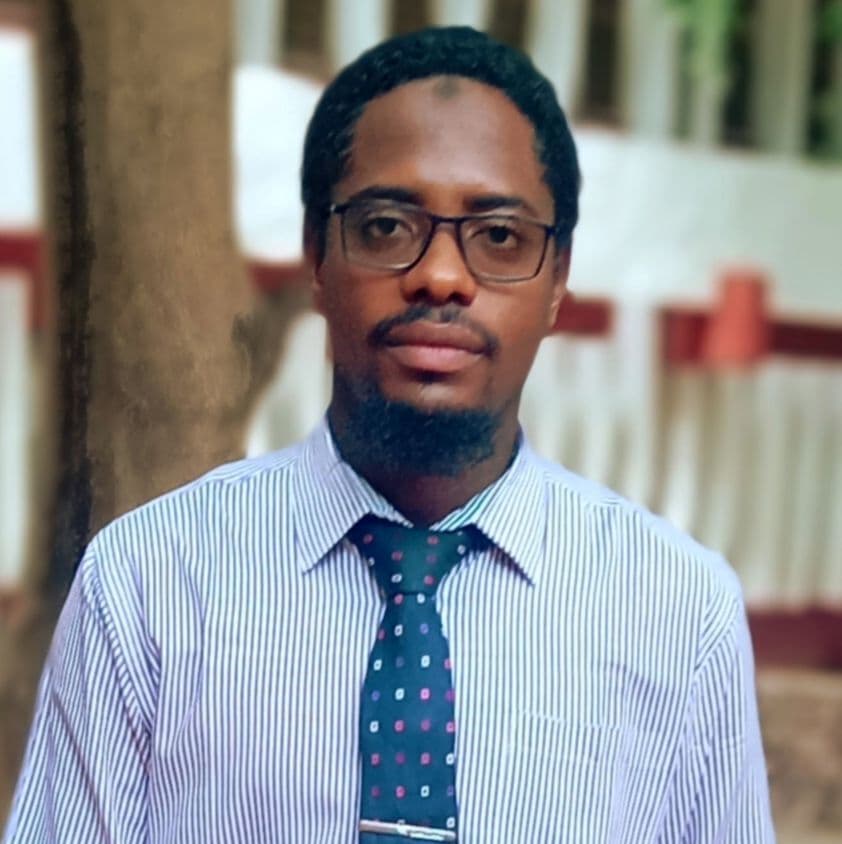
For the founders, that honesty changed how they measured their own setbacks. “Thank you for sharing eight lessons drawn from forty-plus years of mistakes. It was far more valuable than a list of successes,” said Kamogelo Malinga, a founder from South Africa building NucleoNovus, a venture bringing molecular biology tools to African laboratories. “Your point about treating failure as data, not defeat, reframed how I think about the setbacks ahead. Hearing that Vertex’s cystic fibrosis program was initially rejected by your own business team, and that you pursued it anyway because solving the problem mattered more than the spreadsheet, gave my confidence a real boost. Thank you for the permission to fail forward.”
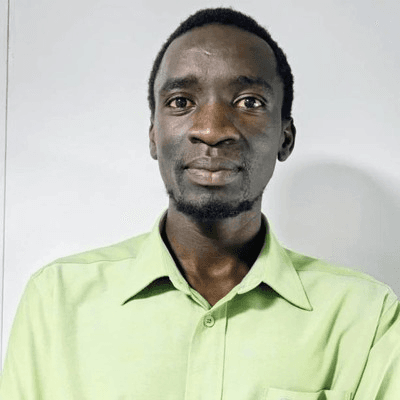
Others heard permission to lead with purpose rather than metrics. “Your insight that a founder must always stay anchored in the company’s mission and vision, rather than focusing on the money, deeply resonated with me,” said Al-Amin Musa Ardo, a founder from Nigeria building Smart-Eye Diagnostics. “I was especially moved by your reminder that, at the end of the day, it must always be about the people. Leading with that audacious purpose, instead of letting investors do diligence until you die over early metrics, is exactly the mindset we are anchoring ourselves in as we scale our own diagnostic platform.”
And for those just beginning, his honesty made success feel earned rather than innate. “I appreciated your honesty about the mistakes and setbacks that shaped your journey, because it made success feel like the result of continuous learning rather than perfect execution,” said Nana Safo Duker, a founder from Ghana building GeneHus. “One insight I will carry with me is that founders should stay deeply committed to solving meaningful problems while remaining humble enough to learn and adapt. As I build GeneHus, your experience strengthened my confidence that persistence and disciplined decision-making are just as important as scientific innovation.”
That is the work the FAS Biocamp exists to support. The founders in that room are building the diagnostics, therapeutics, and tools their communities need, and the road ahead will be long and full of mistakes. Joshua Boger’s message was that this is not a sign they have chosen wrong. It is the shape of building something that matters, one honest failure at a time, with the mission held steady the whole way.