Most scientists picture a company as a great idea plus money. Suman Lal has spent his career proving it is something harder, and more deliberate, than that. At the 2026 FAS Biocamp, he showed the cohort how deep science actually becomes a business.
Suman is the founder of Zero-to-One, a Cambridge-based firm that partners with scientists to build deep-technology startups, and managing director of the Technology Innovation Studio in Kendall Square, a working ecosystem where researchers, entrepreneurs, and investors turn discoveries into ventures. He has built and run companies across Boston, New York, and Singapore, often stepping in as the early chief executive himself.

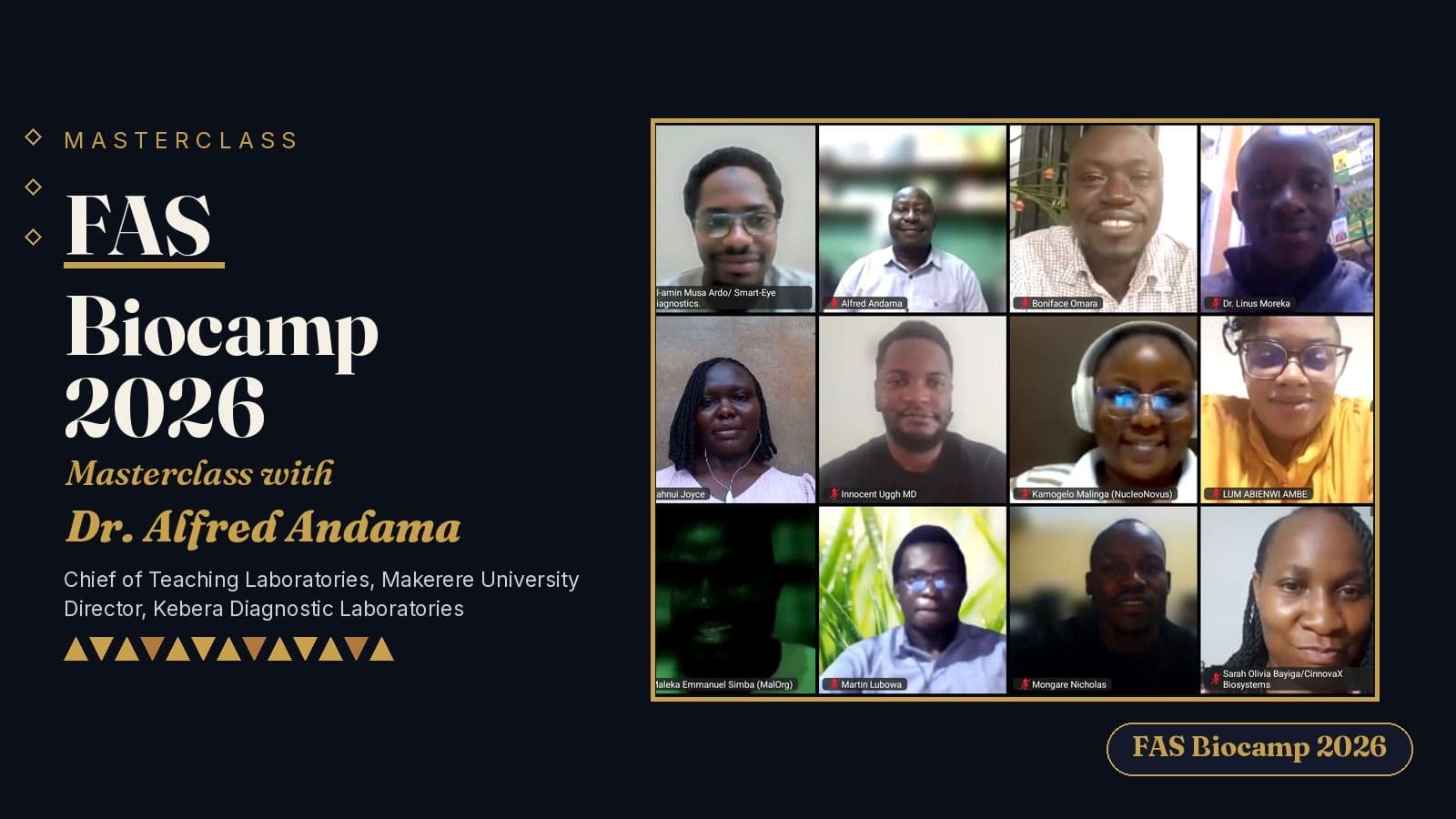
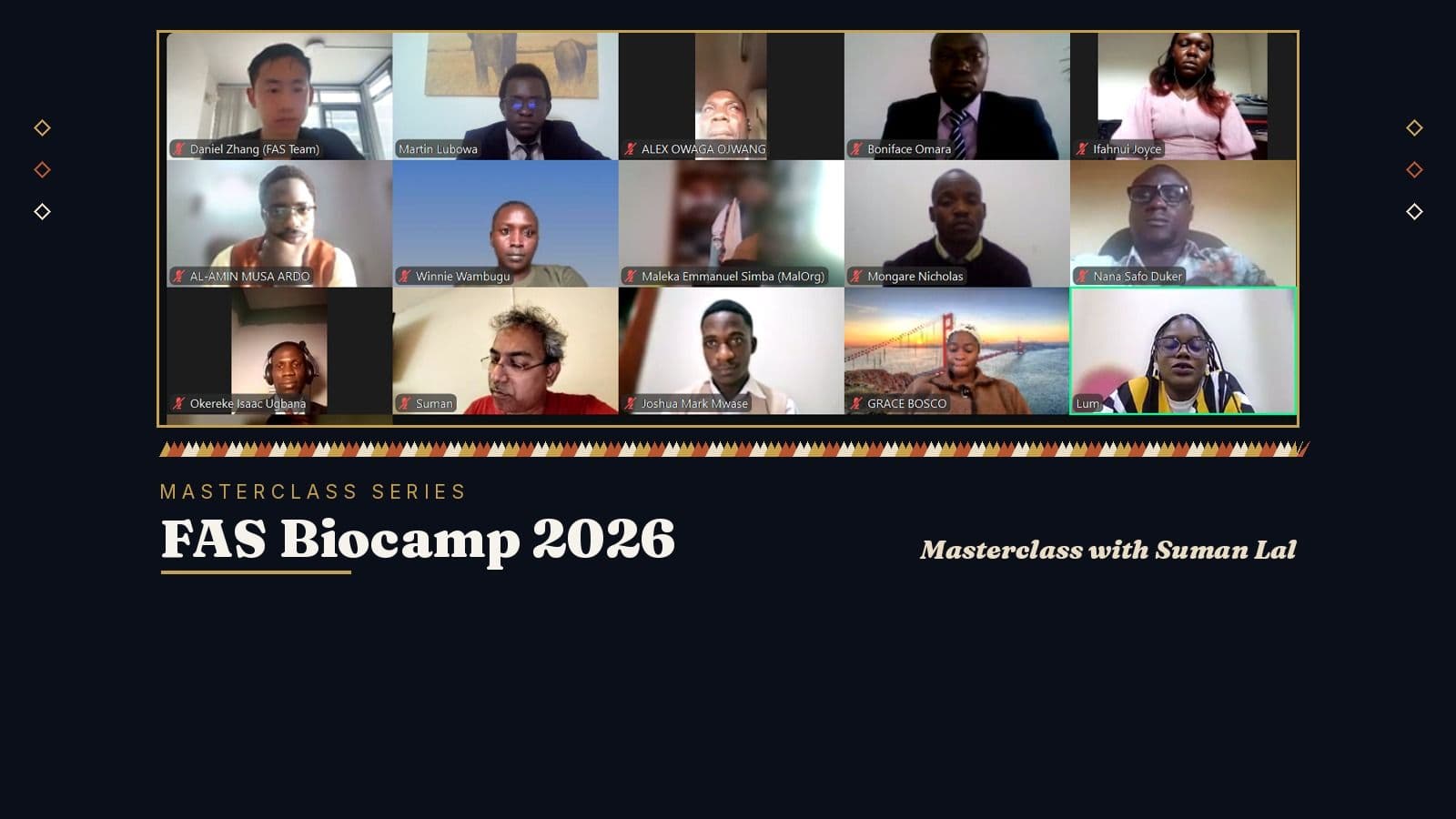
The cohort in Suman Lal's session at the 2026 Biocamp.
His big idea was the venture studio. You do not wait for a finished founder or a perfect product to appear; you build the environment that produces them, systematically generating ideas, assembling teams, and supplying early leadership. And you force the hardest conversation to the front. Before the science is polished and before the pitch is written, you go and find the real problem and the real customer, and you let that shape what you build.
For the founders, it reframed what they were allowed to do. “The idea that stayed with me was your description of the venture studio model, not waiting for founders to arrive, but systematically generating ideas and supplying early leadership,” said Rozy Abiero, a 2026 Biocamp founder from Kenya. “I had been waiting for permission to build. You made me see that the studio model is the permission.”
For others it moved the customer to the front of the work. “Your point that a technology innovation studio is not just a lab plus funding, it is forcing the customer conversation before the science gets perfect,” said Ifahnui Joyce, a founder from Cameroon. “It flipped how I think about my startup: start with the patient or doctor problem first, then engineer back.”
That is the whole idea of the FAS Biocamp. Africa's scientists do not lack the science; they need the environment that turns it into companies. Founders who build that environment, and keep the customer in the room, are how the continent's discoveries become ventures that stay, and grow, at home.