Future African Scientist grew from a simple belief: Africa's most brilliant scientists can build at home, for Africa and the world, and that the continent's greatest challenges will be solved by the immense potential of its own young people. What started as a conversation between two friends on a research course in South Africa has become a pan-African community that turns scientists into founders, and science into the diagnostics, therapeutics, and ventures the continent needs. The milestones below trace that journey, the partners who backed it, the programs that shaped it, and the people who made it real.
2020
Born out of a course by the Ragon Institute of MGH, MIT and Harvard
In January 2020, Martin Lubowa (Uganda, African Leadership Academy) and Daniel Zhang (Massachusetts, MIT) are randomly paired as roommates on Evolution of an Epidemic, Prof. Bruce D. Walker's HST.434 course at the Ragon Institute of MGH, MIT and Harvard, which takes students across South Africa to study the HIV epidemic firsthand.
Late-night conversations keep circling back to one theme: the stark difference in research and mentorship opportunities for scientists in the U.S. versus Africa. A shared pull toward mentorship, sport, and merging science and entrepreneurship turns that conviction into a promise to stay in touch, and within the year, the promise becomes Future African Scientist.
2021
Assembling the founding team
With the idea taking shape, Martin and Daniel bring on Robert Kyomuhendo and Shiba Amutuhaire Kalpakovic to form the founding team.
Rather than assume they already knew the answer, the team spent the year listening, speaking with scientists and students in more than 15 African countries about what was really holding them back. One pattern surfaced again and again: the talent was everywhere, but the training, mentorship, and research opportunity to grow it were not. That insight became the blueprint for FAS's first program, the African Science Research Bootcamp (ASRB).
2022
Bruce Walker joins as an advisor
Two years after the HST.434 trip, Daniel Zhang and Martin Lubowa reach out to Prof. Bruce D. Walker, inviting him to join Future African Scientist as an advisor.
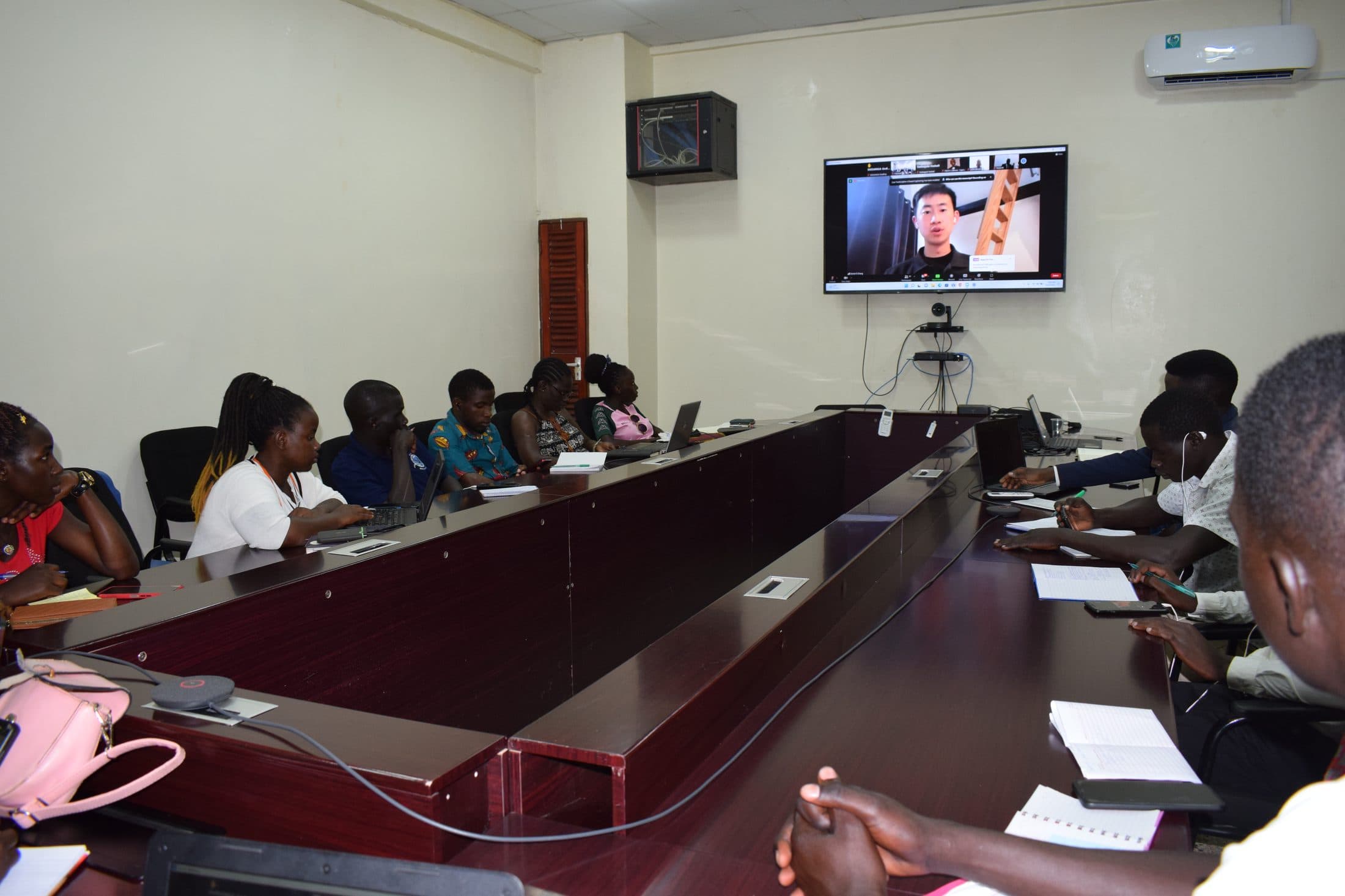
That same year, FAS runs ASRB's first in-person bootcamp at Gulu University in Uganda, its African Science Research course now expanded with new components on entrepreneurship, built using iBiology's education resources. The connection grows both ways: Thi Nguyen, PhD, iBiology's Associate Director of Training Communities, reaches out after hearing from Ugandan researchers completing the Share Your Research course, keen to learn more about FAS's work and how iBiology could support its training community further.
2023
From ASRB to ASON, and Numbu's Falling Walls moment
By 2023, FAS had learned that teaching science alone was not enough. Its pipeline grew into four connected stages that take a student from a spark of curiosity to a small research project that solves a real problem in their own community: a research bootcamp to build the fundamentals (ASRB), a project hub to turn ideas into real experiments (ASPH), an entrepreneurship and leadership program to shape those experiments into workable community-impact projects (ASEL), and an opportunity network that plugs graduates into mentors and further opportunity across the continent (ASON).
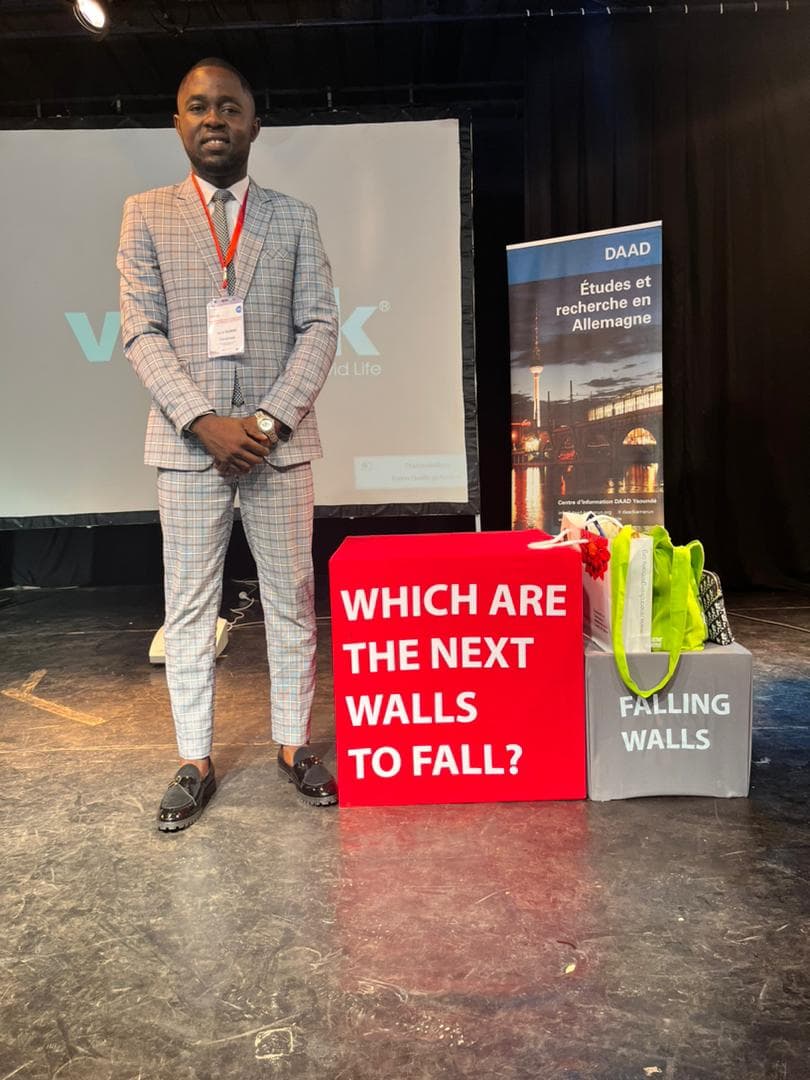
That pipeline has a face. Numbu Holix took an idea he developed during ASEL, turned it into research on a marker for pancreatic cancer, and carried it onto the world stage, placing third at the Falling Walls Lab in Cameroon in 2023. His path, from a classroom idea to an international podium, is the journey FAS was built to repeat, again and again.
Martin Lubowa and Daniel Zhang present FAS at the African BioImaging Consortium, a two-day event at the University of Stellenbosch on October 25–26, 2023, meeting Martin Spitaler there. The presentation touches on mentorship for undergraduates in Imaging Science, upskilling students from other disciplines for the field, and defining clear career paths within it.
That year, FAS also runs another bootcamp, and connects with Elizabeth Marincola, Senior Advisor to the Science for Africa Foundation.
New courses, new partners, and Harvey Lodish joins as advisor
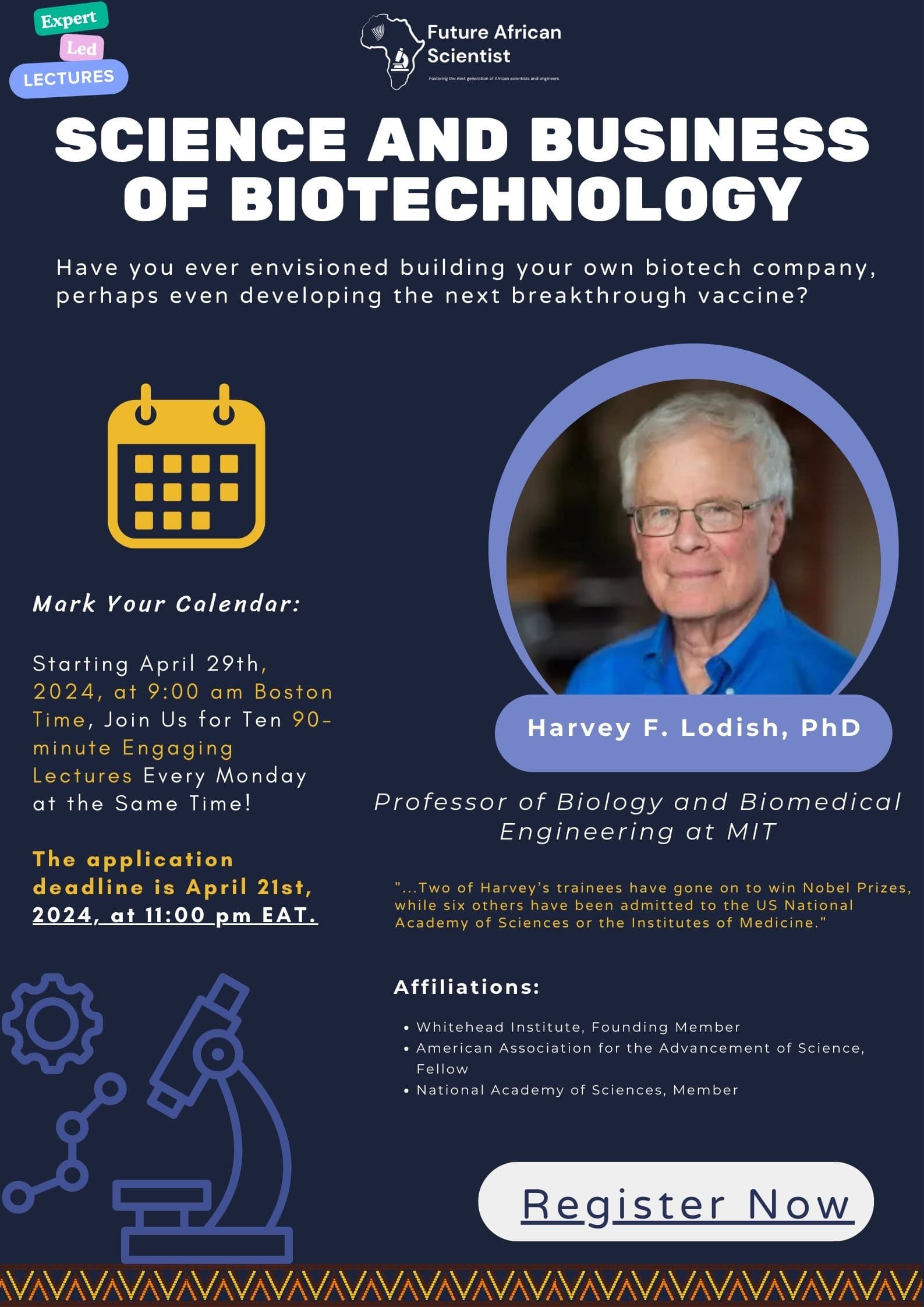
If 2023 proved the pipeline could work, 2024 was about giving it more firepower, teaching students not only how to do rigorous science, but how to build a business from it. Harvey Lodish, Founding Member of the Whitehead Institute and MIT Professor of Biology and Biomedical Engineering, joins FAS as an advisor and teaches a ten-lecture course on the Science and Business of Biotechnology, the exact bridge between the lab and the market that African founders need.
Alongside it, FAS runs a new cohort of its Mentorship Fellowship with PhD students from Washington University in St. Louis, with thanks to Thi Nguyen, and deepens the curriculum with an Optics Workshop from Janelia Research Campus's Advanced Imaging Center and a Good Scientific Practice workshop with the Max Planck Institute of Biochemistry.
Martin and Daniel also connect with Wade Zamechek, Vice President of Development at the African Leadership Academy.
2025
A strategy for African biotech
By 2025, five years of learning had sharpened into a single mission. FAS is no longer only training scientists; it is building the engine that turns Africa's scientific talent into health and wealth sovereignty, equipping the continent's best minds to become founders who close the gap between the lab bench and the market.
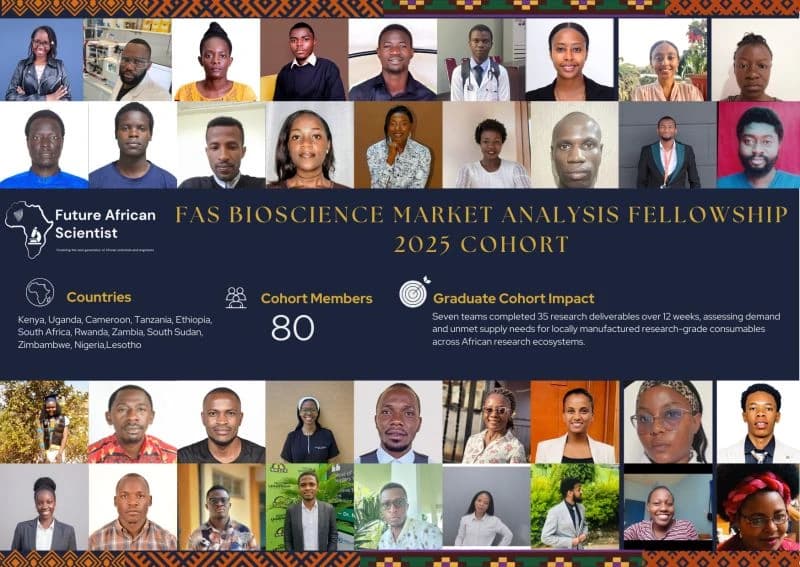
To make that concrete, FAS ran a 12-week Bioscience Market Analysis Fellowship with WinWin Scientific, mapping the bioscience landscape across East, West, and Central Africa and measuring the demand for the research-grade consumables the continent still imports instead of making. It is the first step toward a future where African scientists manufacture their own diagnostics and therapeutics, at home. When you invest in FAS, you invest in that independence. With gratitude to Thi Nguyen and Esse Evbuomwan of WinWin Scientific for leading it.
2026
FAS's most ambitious cohort of African biotech founders, and Ebola forces a pivot to virtual
In progress
FAS had planned to run the 2026 Biocamp in person in Uganda. An Ebola outbreak in the region forced a pivot, and the programme ran fully virtual instead. More than twenty-five fellows from ten countries, the most ambitious cohort FAS has run, joined this year, each carrying a research question out of their own lab, and together they are building eighteen real, investable ventures.
Harvey Lodish, Joshua Boger, and more than sixteen other speakers, scientists, investors, and commercial lawyers among them, addressed the cohort during bootcamp week, June 22 to 26, each sharing lessons from their own journeys building or backing companies.
Two problems run through the cohort, each large enough to be a business as well as a cause. The first is a disease burden that global research has had little commercial reason to price: there is still no approved drug for Sudan ebolavirus, no test for active river blindness that works outside a laboratory, and no routine newborn screening for sickle cell disease across most of the continent. Thirteen ventures take those gaps on directly, building diagnostics and therapeutics for those diseases and tackling malaria microscopy, antimicrobial prescribing, iron deficiency, and the viruses destabilising cassava crops in East Africa. Several are designed around that constraint, not merely adapted to survive it: offline inference, no cold chain, no mains power, a dollar a test.
The second problem is the cost of doing science in Africa at all, and it is a market of its own. Laboratories on the continent wait months for imported reagents and pay several times list price for them. A cluster of ventures in the cohort is building that local supply chain instead, on the bet that a research base that imports its own consumables can never set its own agenda. The rest of the cohort works on postharvest loss, food systems, and clinical nutrition.
Fellows are already engaging customers, securing letters of intent, and raising early funding, with the Biocamp still running as this is written. Every fellow also joins the FAS lifelong community that has supported scientists since 2020, the same network still opening doors for those who came before them. Back this cohort, and you are backing eighteen companies before their first outside dollar, at the moment when your support goes furthest.
Every date on this timeline began with someone who believed early. Help us build the next generation of African biotech founders, and the ventures that will solve the continent's problems at home.