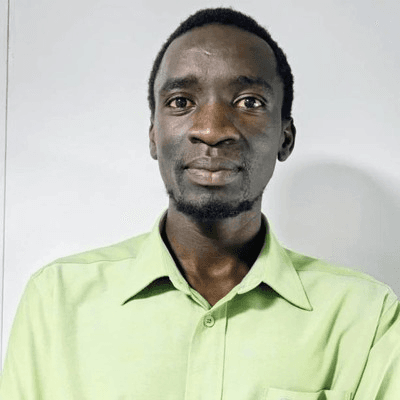
“With Dripra, you get reenergized, replenished, and conquer that journey.”
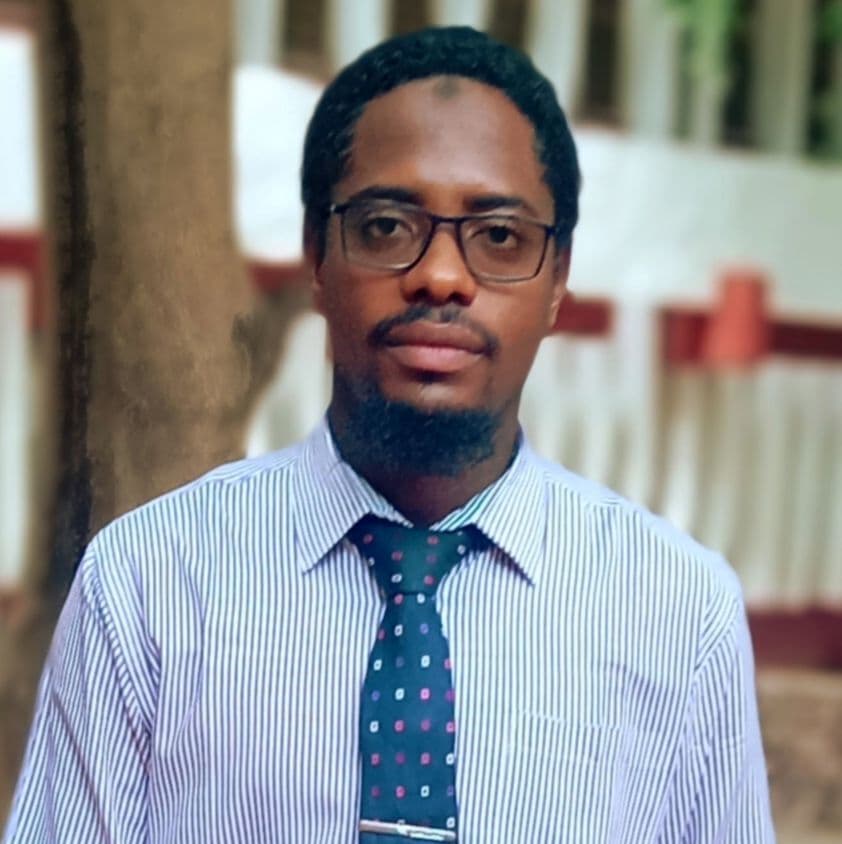
Chelangat Eliud, co-founder of Dripra at Kimbia Sciences, FAS Biocamp Fellow 2026, Uganda
Chelangat Eliud grew up in Sebei, in eastern Uganda, home to the Kalenjin, a people known across Uganda and Kenya for one thing: running. From childhood, he watched the region’s runners go out every morning, mile after mile, and something about their discipline never left him. He carried that same instinct for endurance sport into university, even while he expected his career to go a different way entirely. After finishing his degree, he was brought on as an intern formulating herbal medicine products for a university research project. The sport stayed with him quietly in the background, until it didn’t.
It came back mid-morning, around 10 a.m., on the training track at Mbarara University of Science and Technology. Eliud was out running with a group of teammates, the sun hitting them hard enough that they couldn’t train or compete properly. Burned out and slowed down, the group asked each other a simple question: what could reduce the burnout, and speed up recovery, so training days didn’t have to be wasted like this one?
That question became Dripra, made by a company Eliud co-founded called Kimbia Sciences: a recovery drink built for runners and footballers, designed to replace what intense training burns through. Picture someone in the gym, mid-set, lifting weights: as they lift, they’re using energy their body needs replaced quickly so they can keep training without stalling. That’s who Dripra is for: someone who needs what’s lost during training and competition brought back immediately, not hours later.
The first person to back the idea was the university’s sports tutor, Mr. Benson Kanyesigye. He told them the idea was needed, and necessary, and backed it. From there, they pitched at Mbarara University of Science and Technology’s Centre for Innovations & Technology Transfer (CITT), which funded the early product development. Not everyone was convinced right away, though. The first person to test a bottled version, a non-runner named Victor Mugambe, tried it and spat it straight out: the taste wasn’t there yet. Runners could tolerate it; Victor couldn’t. That split reaction sent the team back to reformulate.
Eliud first heard about FAS through Dr. Duncan and Prof. Joel Bazira, a mentor at his university, who recommended the programme to him. Before applying, he and his team asked themselves plainly: what can FAS actually do for us? He joined the 2026 Biocamp in April 2026, and calls it the biggest pillar of his entrepreneurial journey so far, a hands-on programme that asks you to work through things and not just sit and receive information. What changed how he works day to day were his one-on-one calls with Martin, one of FAS’s founders, who pushes for excellence in whatever you do, in a way that stuck with him after every conversation. Martin is still part of his life today, along with fellow FAS fellow Maleka Simba from Uganda, who Eliud checks in with regularly on each other’s progress.
The core team is four people. Since joining FAS, they’ve brought on two additional advisors around the venture, and Eliud says it’s taking real shape. If he’d never joined FAS, he’s honest that the venture would still be at its starting stage. What FAS pushed him toward, above everything, was excellence: in the product and in the work itself. What he still needs that FAS hasn’t given him yet is funding, and more guidance on building and managing a team well.

Eliud (right) with teammates testing Dripra after a training session.
He was wrong, early on, about something basic: he assumed you build a product first, then take it to people. It didn’t work. Products they built that way weren’t taken up. What he learned, at a real cost of effort, time, and resources, is that you have to sit with people’s actual problems first, before you decide anything for them. The proof that the lesson landed: a coach at Mbarara University of Science and Technology used the product and approved of it, and today Dripra has a pool of 25 active users, drawn from the 400 people the team surveyed during validation.
Regulatory approval, once the thing holding Dripra back, is now cleared. Then, on 16 September 2026, while still partway through his Biocamp cohort, that same CITT office came through again: a UGX 7,000,000 commercialisation grant, this time to fund Dripra’s next stage of production. Eliud credits the lessons he’d already picked up in the programme with helping him land it.

Eliud with the CITT Commercialisation Grant Award: UGX 7,000,000 for Dripra, awarded 16 September 2026.
Chelangat Eliud, in a note to FAS after winning the grant: “Receiving this commercialization grant for Kimbia Sciences and Dripra is not simply a funding milestone. It is evidence that the lessons, mentorship, and opportunities provided by FAS are producing real outcomes.”
What Eliud is looking for now is capital to grow: someone who can help fund the next stage of scaling the product to more runners and footballers.
More on Dripra and Kimbia Sciences: kimbiasciences.com