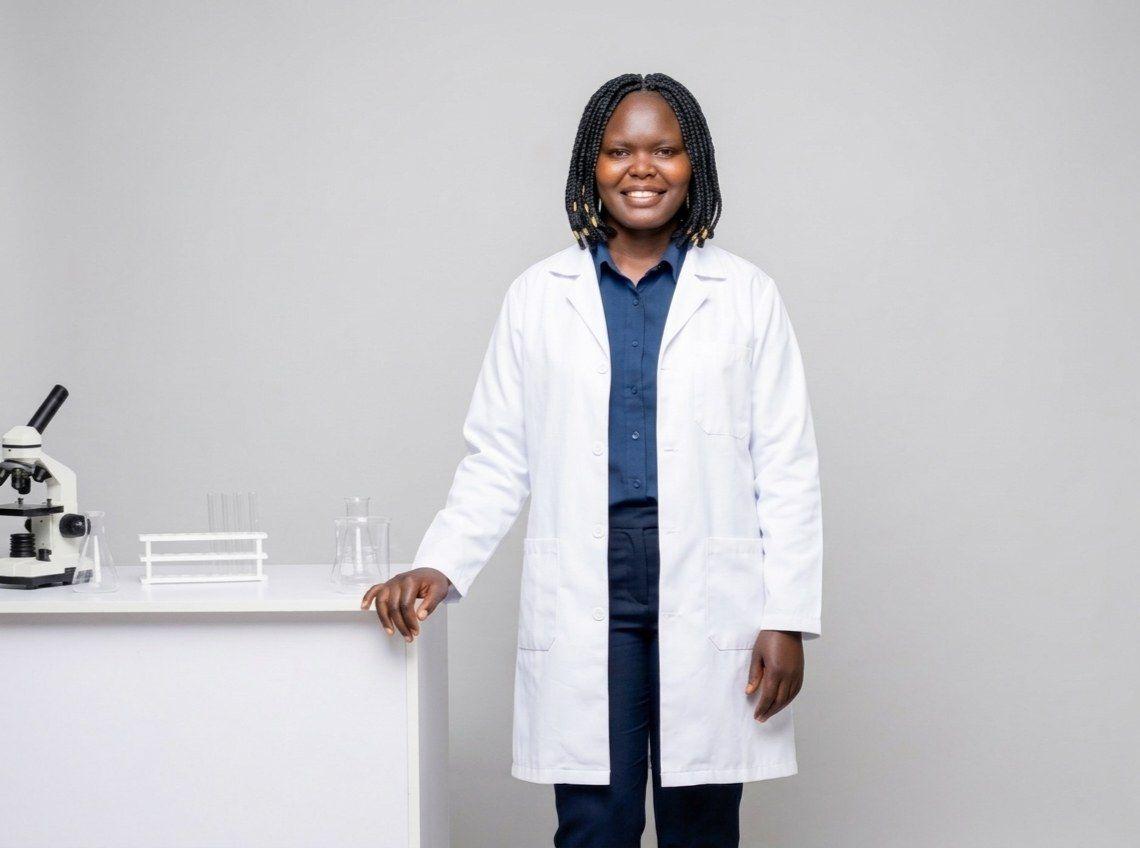
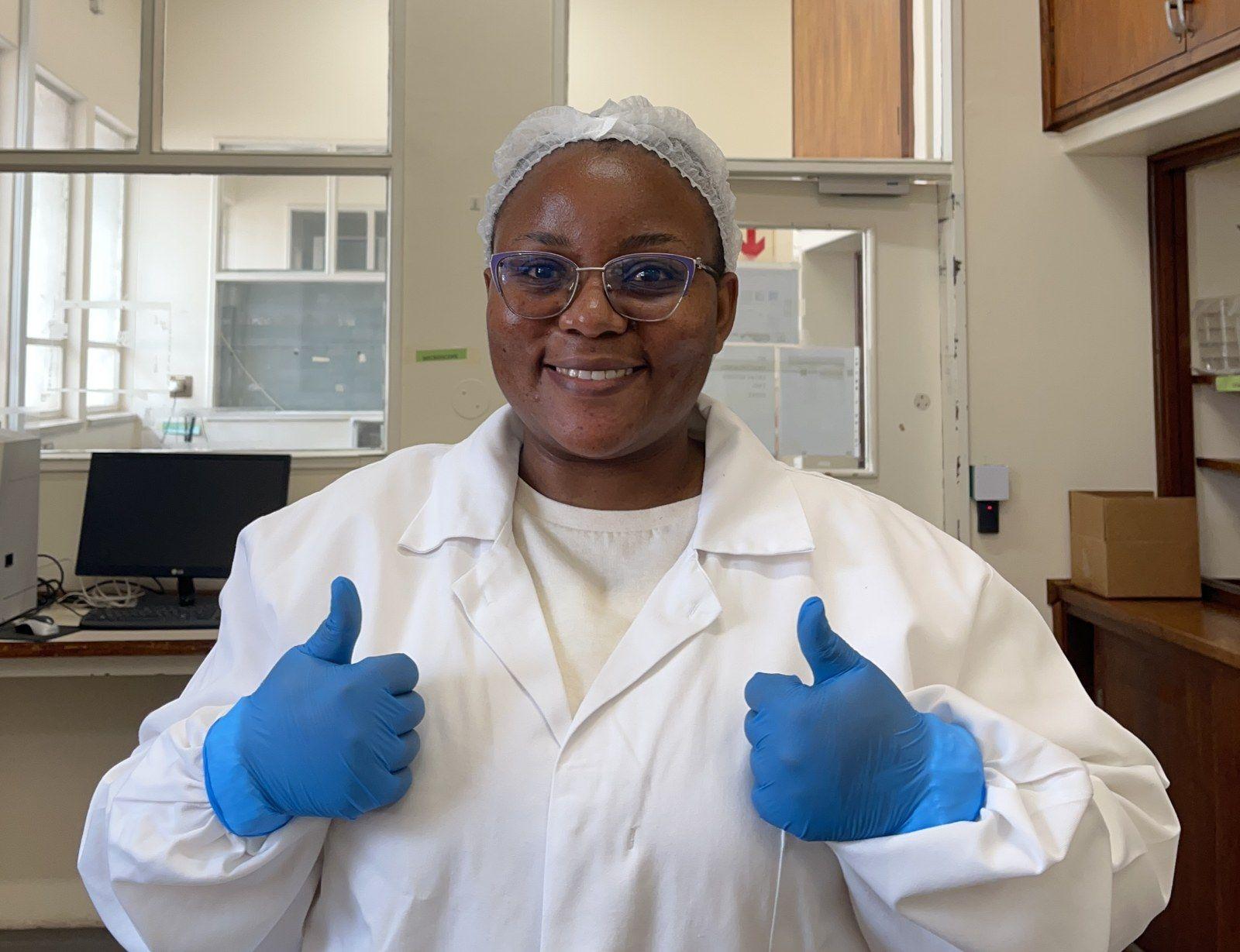
Kamogelo Malinga, co-founder of NucleoNovus, FAS Biocamp Fellow 2026, South Africa
Kamogelo Malinga comes from a small town in South Africa with almost no laboratories. After her BSc, she went back there to volunteer in a lab, and what she saw there is the reason NucleoNovus exists. Patient samples were being sent back unprocessed because the lab had no reagents. Diagnoses were delayed. Researchers waited, too, for supplies that were somewhere on a ship or a shelf in another country. She did not read about the problem. She stood in the room where it happened.
Her path to that room began earlier, during COVID-19. People around her had little knowledge of vaccines, and the articles they found online were so full of scientific language that they could not follow them. Kamogelo took it on herself to explain vaccines in plain words to the people near her, and some of them changed their minds. That was when she decided she wanted to be a medical researcher, a plan that is still on.
NucleoNovus develops affordable, locally made DNA extraction kits for laboratories, so scientists can extract DNA quickly and reliably. The person she has in mind is a laboratory scientist who spends her day processing samples. When an imported kit is late, her whole day slows down. With a local kit that arrives on time, she can get on with the work.
The idea took shape during a market analysis assignment in FAS’s Bioscience Market Research Fellowship in 2025. Kamogelo and her team interviewed people at different companies, research institutions and universities, and about 95% of them relied on international suppliers. The size of that number is what turned an observation into a venture.
She first heard of FAS while scrolling LinkedIn for work and taking short courses, one of them with CSIR. She noticed the FAS market analysis course, reached out to a woman who had completed it, and then applied the minute she saw that FAS shared a goal she cared about: Africa CDC’s push to make a larger share of the continent’s vaccines locally. Nothing stopped her. Until that course she had no skill in market analysis. She learned where laboratories in Africa get their reagents and consumables, how long they take to arrive, and what the logistics look like.
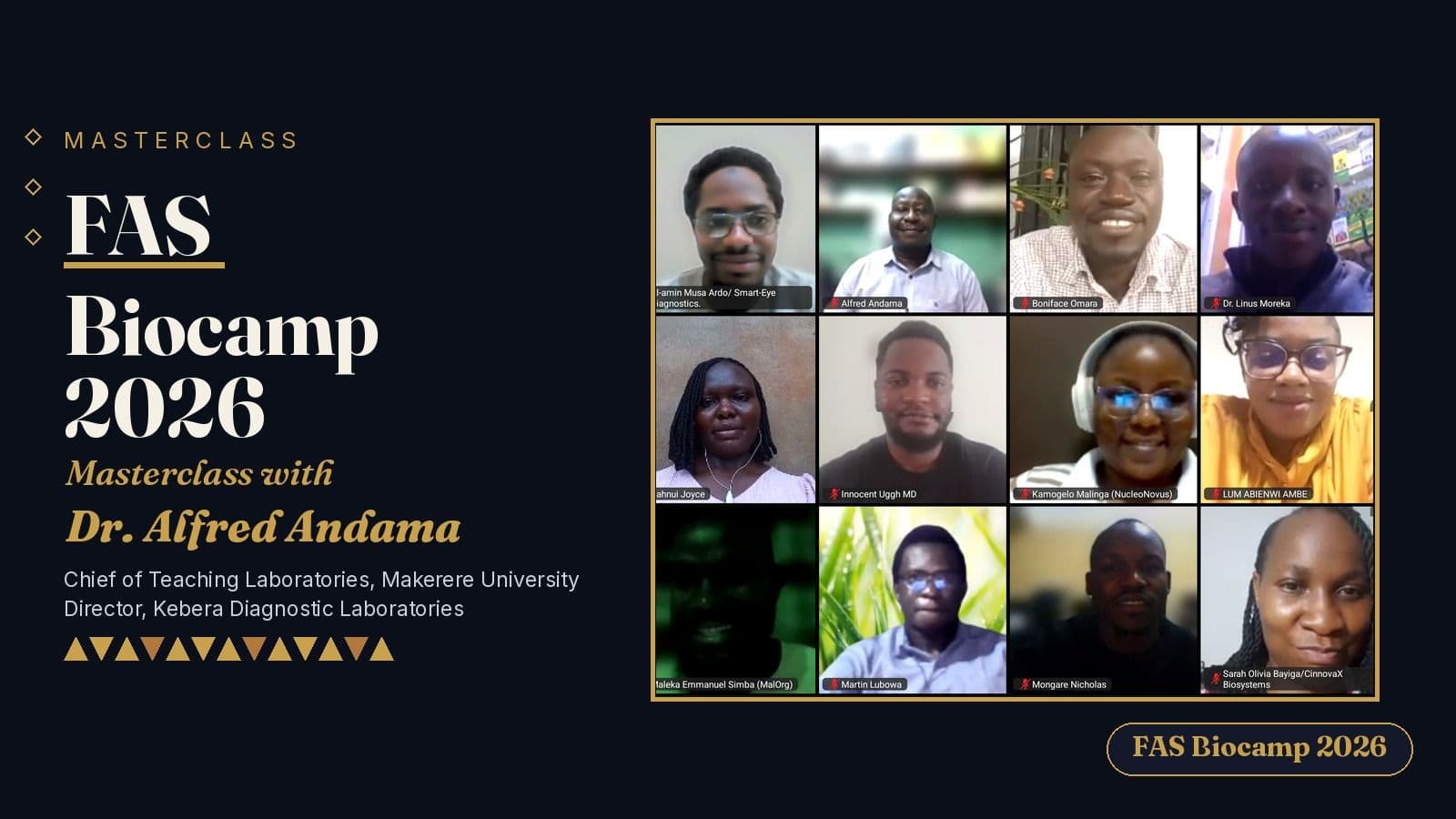
One session changed her behaviour quickly. A speaker in a FAS masterclass told the group to learn the regulatory side before building anything. Within days, Kamogelo reached out to friends at South Africa’s health products regulator and asked what they look for when deciding whether a product qualifies. She asked before she built.
More people have engaged with the team’s interview questionnaire. She notes that someone from FAS still reviews her documents before she sends them out, a habit that began when they built the company website together.
NucleoNovus is pre-seed. There is no revenue and no hires yet. The venture has two advisors, from the South African Medical Research Council and the founder of another health company. If she had never joined FAS, she says, the company would not exist: she wanted to go into business, but it was not this business.
She was wrong about something she thought was obvious. The market research confirmed the problem was real, and she assumed laboratories would quickly try a local solution. They did not. Labs are reluctant to leave the international suppliers they already use. It cost her nothing to find out, and she is now rethinking how she approaches institutions.
The problem she cannot solve today is the prototype. NucleoNovus has no research team and no technical scientist to develop it. Funding would solve part of that. For funders, she is willing to offer shares in the company. For scientists who would join the team, the work would have to be pro bono until there is revenue, and then they can be paid. What FAS has not yet given her, she says plainly, is funding.
More on NucleoNovus: nucleonovus.com